The Neuroscience of Solving: Why Dopamine Puzzles Are the Ultimate Brain Hack
Explore how dopamine puzzles trigger the brain's reward system. Learn about cognitive age reversal, the Zeigarnik Effect, and 2025 trends in brain health.
By Free To Play Puzzles Editorial Team 9 min read
Have you ever felt that sudden, electric surge of satisfaction when the final piece of a 1,000-piece jigsaw clicks into place? Or that "aha!" moment when a cryptic crossword clue finally reveals its secrets? That isn't just a fleeting moment of happiness; it is a biological "reward loop" in action. Recent research into dopamine puzzles suggests that these activities are one of the most effective ways to naturally stimulate your brain’s chemistry, fostering a sense of accomplishment that social media scrolling simply cannot replicate.
Puzzle makers deliberately design these reward loops for solvers, and the "puzzle reward" system keeps the mind sharp, engaged, and hungry for the next challenge. In this guide, we will dive deep into the neuroscience of why we love to solve, how it protects our long-term cognitive health, and why 2025 is becoming the year of the "puzzling renaissance."
The Biology of the "Aha!" Moment
At the heart of every puzzle is dopamine. Often misunderstood as a simple "pleasure chemical," dopamine is actually the neurotransmitter responsible for motivation, focus, and the anticipation of a reward. When you engage with dopamine puzzles, your brain isn't just reacting to the win; it is thriving on the search.
The Seeking System
Dopamine is released during the process of solving, not just at the end. Every time you find a border piece or identify a pattern in a grid, your brain delivers a micro-hit of dopamine. This reinforces the neural pathways associated with concentration and pattern recognition.
The Zeigarnik Effect
Why is it so hard to walk away from an unfinished puzzle? Psychologists call this the "Zeigarnik Effect." Our brains have a natural tendency to remember uncompleted tasks more vividly than completed ones. This creates a state of cognitive tension that can only be resolved by finishing the task. When you finally place that piece, the release of that tension provides a significant puzzle reward that leaves you feeling refreshed rather than drained.
Cognitive Age Reversal: The Proof in the Numbers
The benefits of puzzling go far beyond a temporary mood boost. According to a landmark 2024 study by UCLA Health involving over 20,000 adults, the impact on brain age is staggering. Individuals who engaged in number puzzles like Sudoku or word games more than once a day showed cognitive performance levels typical of people 8 to 10 years younger.
Building Cognitive Reserve
Puzzles are a primary tool for building "cognitive reserve." Think of this as a savings account for your brain. By constantly challenging your neurons with Logic Puzzles, you create a buffer that helps the brain function better for longer.
| Benefit | Impact | Source |
|---|---|---|
| Brain Age | 8-10 Year Reversal | UCLA Health (2024) |
| Dementia Delay | ~2.5 Years | Neurological Research |
| Intelligence Type | Improved Fluid Intelligence | Psychology Today |
Advertisement
Hemispheric Synergy: Using Your Whole Brain
One of the unique aspects of dopamine puzzles—specifically jigsaws and 3D models—is their ability to demand "hemispheric synergy." Most daily tasks lean heavily on one side of the brain.
- The Left Hemisphere: Handles the logic, the analytical steps, and the systematic sorting of pieces by color or shape.
- The Right Hemisphere: Processes the "big picture," intuition, and spatial orientation.
When you are deep in a puzzle, these two halves are in constant communication. This cross-talk is a hallmark of The Flow State Puzzles, where time seems to disappear, and your focus becomes absolute.
The Rise of 3D Puzzling
In 2025, neurologists at institutions like Johns Hopkins are increasingly recommending 3D mechanical puzzles. Unlike flat puzzles, 3D models require intense spatial visualization and planning. This activates the parietal lobe, the area of the brain responsible for mapping out the world around us.
Digital vs. Physical: The 2025 Wellness Shift
While Brain Training apps are more popular than ever, a major trend for 2025 is the return to physical, tactile puzzling.
The "No-Phone Zone"
As we become more aware of the negative effects of blue light and "infinite scroll" fatigue, physical puzzles offer a "no-phone zone." Health coaches now recommend physical dopamine puzzles as a way to lower cortisol (the stress hormone) before bed.
The Sustainability Movement
The "Eco-Puzzling" trend of 2026 is already taking root. Consumers are moving away from cheap, plastic-coated puzzles toward bamboo, recycled wood, and sustainable bioplastics. The dopamine hit feels even better when it's "guilt-free" and environmentally conscious.
Finding Your "Goldilocks Zone"
To keep the dopamine flowing, you must manage the difficulty curve. If a puzzle is too easy, the brain becomes bored, and the dopamine release stops. If it is too hard, you trigger a stress response, which inhibits learning.
The Variety Rule
To maximize Puzzle Psychology benefits, you must introduce novelty. If you only ever do the daily crossword, your brain becomes too efficient at it.
- Monday: Sudoku for logic.
- Wednesday: 3D Mechanical model for spatial reasoning.
- Friday: Social "Puzzle Café" or swap meet for community connection.
Advertisement
Common Mistakes to Avoid
Even the most seasoned solvers can fall into traps that diminish the cognitive benefits of their hobby.
- Chasing the "Detox" Myth: You will often hear about "dopamine detoxing." In reality, you cannot detox from a chemical your body needs. The goal should be Dopamine Re-alignment—replacing low-value triggers (like TikTok) with high-value triggers like puzzles.
- Sticking to One Category: Relying solely on one type of game limits your growth. A balanced "Dopamine Menu" should include word, logic, and spatial puzzles.
- Ignoring the "Aha!" Moment: Don't rush to the solution or use a hint immediately. The "puzzle reward" is strongest when you have to work for it. If you're stuck, read about Puzzle Satisfaction to understand why the struggle is necessary.
The Future of Puzzles: AI and AR
As we look toward 2026, the technology surrounding our favorite pastimes is evolving.
- AR-Enhanced Jigsaws: "Smart Puzzles" now allow you to scan a completed physical jigsaw with your phone to see it come to life with 3D animations or educational overlays.
- AI Personalization: AI platforms can now take a personal memory—like a photo of a family pet—and create a custom-difficulty puzzle designed specifically to hit your personal "Goldilocks Zone."
- Social Puzzling: The trend is shifting from solo play to "Puzzle Socials." Much like board game cafés, these spaces offer a "third place" for people to connect over a shared goal, boosting oxytocin alongside dopamine.
Frequently Asked Questions
Do puzzles actually make you smarter?
While puzzles don't necessarily increase your raw IQ (your innate ability to learn), they significantly improve fluid intelligence. This is your ability to solve new problems, identify patterns, and use logic in novel situations. They also improve your "processing speed"—how quickly your brain can take in and act on information.
Why are puzzles so addictive?
The "addiction" comes from the Zeigarnik Effect and the brain's desire to resolve "open loops." Your brain views an unfinished puzzle as a problem that needs fixing. Each time you place a piece, you get a small puzzle reward in the form of dopamine, which encourages you to keep going until the tension is fully resolved.
Is digital puzzling as good for my brain as physical puzzling?
Both have benefits. Digital puzzles are excellent for accessibility and variety. However, physical puzzles offer tactile stimulation and a break from screens, which is vital for reducing cortisol and improving sleep. A healthy brain "diet" includes both.
Can doing too many puzzles be bad for you?
Not "bad," but it can become "ineffective." If you do the same type of puzzle until you can do it on autopilot, the dopamine reward diminishes because the challenge is gone. The key is to keep the "challenge-to-reward" ratio high by constantly introducing novelty.
Can puzzles cure Alzheimer’s or dementia?
No. Puzzles are not a cure. However, they are a powerful tool for building cognitive reserve. This can delay the onset of symptoms by an average of 2.5 years and significantly improve the quality of life for those in the early stages of cognitive decline.
Conclusion
The science is clear: dopamine puzzles are more than just a way to pass the time. They are a vital exercise for the human mind, providing a sustainable, healthy way to engage our reward system. By embracing the challenge, seeking out the "Goldilocks Zone" of difficulty, and staying curious about new formats, you can effectively "de-age" your brain and find deep satisfaction in the process of solving.
Whether you are fitting together a 1,000-piece landscape or cracking a difficult Logic Puzzles sequence, remember that every piece you place is a win for your long-term mental health.
Ready to Level Up?
Explore our collection of brain-boosting challenges and start your reward loop today.
Put it into practice
Keep reading
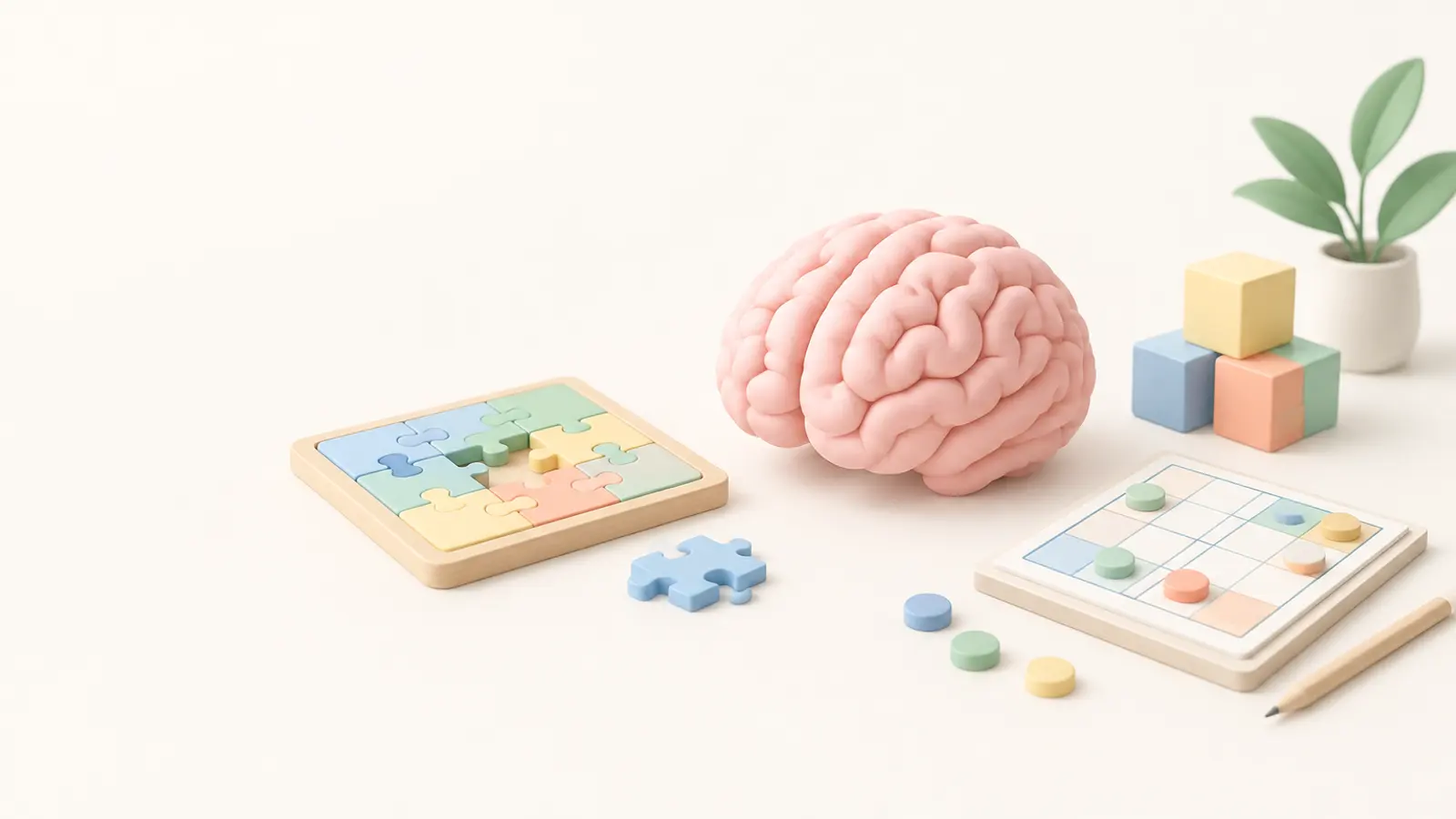
Brain Training
Puzzles for Dementia Prevention: Brain Health Guide
Discover how puzzles build cognitive reserve and may delay dementia onset by 2.5 years. Research-backed strategies for brain health through mental stimulation.
Jan 19, 2025 12 min
Logic Puzzles
Mastering Kuromasu Puzzles: The Ultimate Guide to "Where Is Black Cells"
Explore the fascinating world of Kuromasu puzzles. Learn rules, advanced strategies, and the cognitive benefits of this Nikoli classic.
Sep 30, 2026 10 min
Arcade Games
The Neuroscience of Play: Unlocking Arcade Games Brain Benefits
Discover how arcade games boost neuroplasticity, improve impulse control, and can even reverse brain aging by up to 4 years according to 2025 research.
Sep 12, 2026 12 min
Advertisement